

Tuesday, December 27, 2011
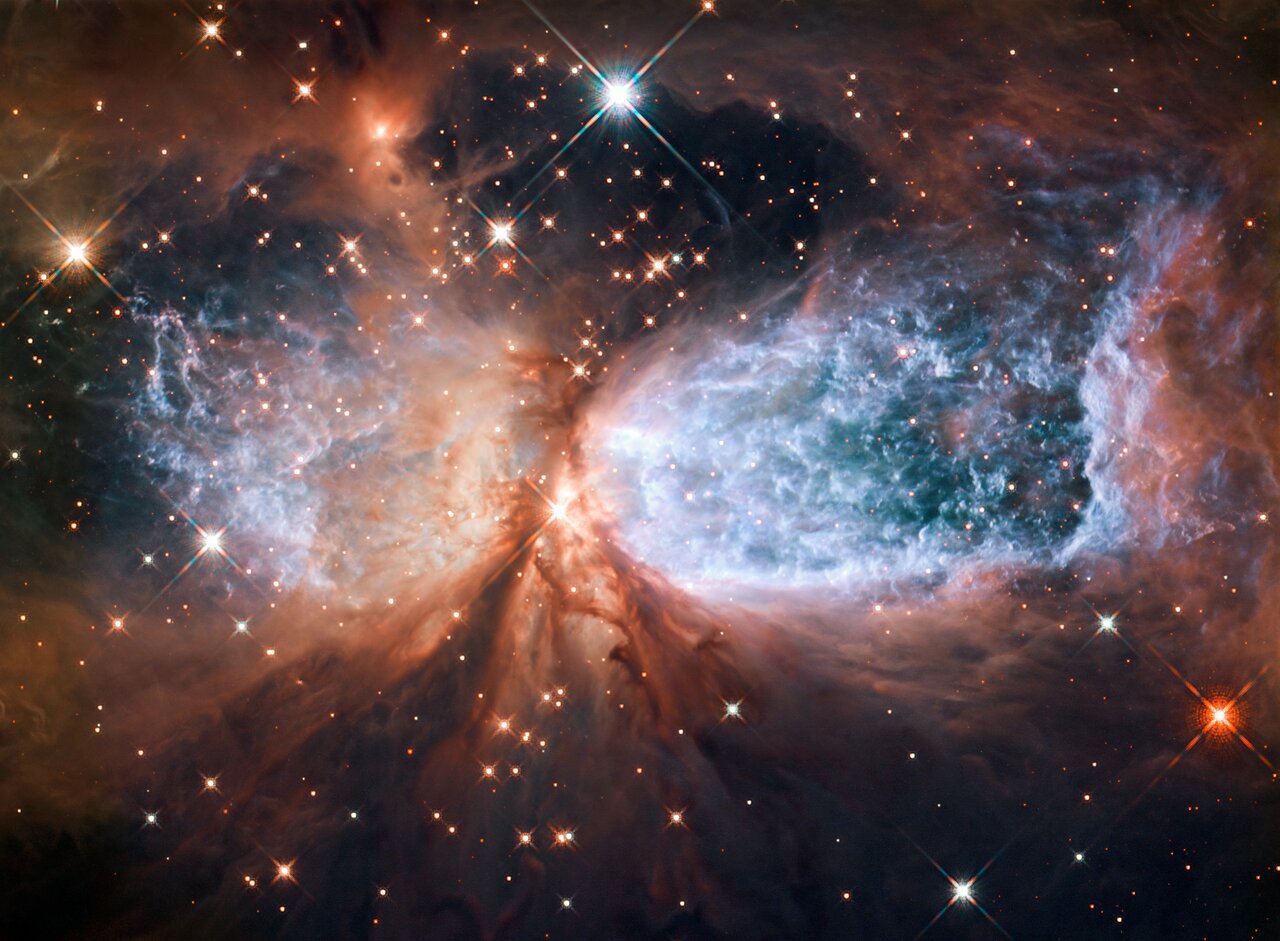
astro picture for the day!

Friday, December 23, 2011
hodge conjecture lecture
Thursday, December 22, 2011
an Evening with Leonard Euler
Leonared Euler dominated the 1700s after Isaac Newton and Liebniz started analyses(the mathematicians word for calculus and generalizations like calculus of variations, complex analyses . . . later in the 1800s tensor analyses). He pushed analyses about as far as it could be and number theory also till Frederick Gauss's work on congruent numbers and differential geometry.
Dunham does point out that Leonard Euler was human. Some stuff I've read of what Leonard Euler missed would be fourier analyses and elliptic functions. Frederick Gauss found elliptic functions but did not publish. He found non-euclidean geometry and didn't publish those either out of not wanting to deal with the fearing general populace who would call him satin or something. Bottom line is after Leonard Euler with Frederick Gauss and others, mathematics became abstract everything; abstract algebra(alternative algebras from group, ring, and field theory to invariant theory and quaternions . . . a generalization of complex numbers), non-euclidean geometry, infinity was conquered by George Cantor(for the most part, there was Galileo's hint in his Two New Sciences: great book! Full of the scientific adventurous spirit!), numbers were replaced by set theory(george cantor, but also Richard Dedekind) as the most fundamental mathematics(some mathematicians today would say category theory has replaced set theory as the most fundamental mathematics; i'm not there yet; i have gotten through set theory and deductive logic books like Suzanne K. Langer's "Introduction to Symbolic Logic"; great books! Don't let the title fool you! It shows how abstraction works and is related to the deriving of symbolic logic and hence mathematics from language!). It's been related that another George Cantor, a historian not related to the transfinite numbers theory, made a history of mathematics from the few scraps of ancient times up to 1800(the end of the Leonard Euler time and end of classical mathematics period); it filled four thousand page volumes; to do a comparable, bio brief, history of mathematics of the 1800s alone would take twenty volumes!(I'd recommend Felix Klien's history of mathematics in the 1800s; i'll go ahead and point out perhaps the major dominant idea that continued to dominate up to the solving of the poincare conjecture just a few years ago . . . the relation between rieman surfaces and algebraic geometry.
- i've debated whether to post this on this scientific humanism blog for awhile now. I just decided to post it just to inspire and show the excitement of the mathematical spirit. I just found some more videos perhaps only recently posted on youtube; they were at the clay institute of mathematics for awhile. I'll of course post it tomorrow and hopefully i can find more quality mathematics videos!
Sunday, December 18, 2011
note for the day
My Gosep of Truth has been updated with more revelations between Plato's Republic and Jesus Christ sungod!(and the possibility that Paul was Josephus!)
youtube for the day/ Stephen Wolfram about limitations of the mathematical worldview
Steve Wolfram argues for a kind of technology mining instead of say mathematical modeling. I and Jacob Bronowski will point out that your not going to find the quadratic formula laying around on the ground cruncking out the patterns of nature. We know that mathematics is an idealization. But, Mr Wolfram wants to go much further.
Even if he's right, I feel that there's a bit of a problem with how far he's going with this. Assuming he's right, wouldn't the use of fire by Homo Erectus, the use of animals, windmills kind of like technological mining of stuff they didn't really understand? How about artificial selection of animals ten thousand years ago of both animals and planets to make agriculture civilization to happen? Well, maybe! But, it's mathematics that has made those things really fly; genetics and molecular biology period. Or, thermodynamics and steam engines. Shoot, there's natural nuclear reactions found by geologists; maybe if humans(or intelligence in general) had figured out how to mine enough uraneum and just put enough together, they could have made at least a dirty bomb back thousands of years ago! But, without the mathematics, nobody would have made the trinity test happen(or a pathway to the stars - nuclear powered spacecraft).
The above points to something I've been trying to think about more recently. That despite the fact that mathematicians can come up with much mathematics, the mathematics isn't finished until it's logically proved; and, the process of doing these proofs often leads to more mathematics(the irrationality of the square root of two is one immediate example; linear algebra coming from substitions of equations to solve the general third degree equation is another recent one I've found; the recent solutions to Fermat's Last theorem and the Poincare conjecture leading to much of the topology of the 20th century are other more recent examples). Yes, one can do technology without mathematics; but, mathematics gives it wings.
Another more science and mathematics topic I've been trying to think about recently to post(other than all this philosophy!) is chaos theory. The science of astronomy eventually led to great clocks from the 1300s to the Nuremberg egg as shown by James Burke connections videos(and his books; the books have much the same but some more details of course; the videos actually have details not shown in the books as well!) posted throughout this blog). What about the mathematics since? What is that leading to? Some people say number theory has no applications; well, computers for one disproves that. But, I'm starting to like chaos theory as another answer. I've seen chaos theory applications recently applied to nuclear fusion(instead of fission that's we've been using so far; in case my readers don't know; i don't know who most of my readers are!) and electron microscopes! Chaos theory in terms of, or related to Steve Wolfram above below,
I'd like to point out that the chaos theorists have this idea of going from a strange attractor state to a regular attractor state and then back to a chaotic state; and, they have shown they can go from chaotic to any of a given chaotic attractors possible stable states. Could one say they can go from irreducible complexity to reducible computational complexity - kind of like Mr Wolfram's technology mining he's talking about here?
Friday, December 16, 2011
youtube for the day/ first footage from space/ V2 rocket of 1946
Note, in previous news, I've updated my 11/18/11 post about global warming(with a youtube attachment of James Burkes "After the Warming" video to boot!). It appears the effort to meet the five year deadline will fail! Methane stores are leaking from the arctic ice shelves. Well, it's going to be a ruff twenty first century!
Thursday, December 15, 2011
Subscribe to:
Posts (Atom)