Monday, May 29, 2017

James Burke connections application, and New connections between Burke's connections and Bronowski's "Origins" book findings


I'll start this by quoting my own comments in the youtube video embedded above,

Well, this show was interesting on a number of fronts. On the one hand, they're trying to push James Burke's connections app(which I hope to get someday), and argue for a connectionists viewpoint . . . and, on the other hand, the interviewer mentions how "what we perceive about the world, is not necessarily what it is."
Jacob Bronowski, for one, notes(really quotes), in his "Science and Human Values" how the idea that science discovery comes from going around and jotting everything down is wrong. Science is not a collections of facts. If that's the way science works, we'd never get past noting that the Earth appears flat, that things don't evolve, and so on, and so forth. What's more, if the brain was just taking in all the sensory data like a camera and recording everything it sees, the head would explode. Or, it would be saturated . . . on sight(not to mention the hearing, the sense of touch, and taste and so on). The memory storage would be completely filled up as of when the eyes open. So, the brain can't work connectionist.

- I think it's the second or third post of this blog, where I posted one of my first efforts to show connections between some connections James Burke finds in his "Connections" video series/book, and Jacob Bronowski's ideas - from his "Science and Human Values" to his "Origins of Knowledge and Imagination."

I've shown some new findings on those connections in various posts(I even explain it in my latest Gospel of Truth redo - in the introduction. But, I actually introduce the new findings, for the first time, in my finite and infinit blog post). I point out that while their seems to be a similarity between new ideas generated in a technological setting(by means of damning up nature in some way. For instance, in agriculture, one clears the field, and at that point, one needs to introduce the ideas of irrigation/pest control, and I'm forgetting the third one. In mathematics, for instance, after numbers advance enough to construct sums like 1+2=3, one might ask 1+a=3 instead of the usual 1+2=a. Here the concept of a variable gets naturally introduced), and new ideas in mathematics. In mathematics, idealization corresponds to clearing of the fields. But what's the connection between the abstract world of mathematics and the concrete technological world?

The idea I point out comes from Susanne K. Langer's "Introduction to Symbolic Logic", which has the best introduction to how abstraction works I've ever seen in any logic, or mathematics book. What she points out is there's constituent relations and logical relations. The constituent relations are the relations between things on a concrete level. And the logical relations exist on the mathematical level.

I think that's all the new ideas since writing my original account of my findings between some of James Burke's connections and Jacob Bronowski's ideas. I actually don't explain the whole constituent/logical relations thing. I'd have to re-write the whole explanation of abstractions, which can be found elsewhere in the blog or in Susanne's book. I want to get on to some new ideas here.

- Maybe a little storytelling is o.k. here . . . I had hit on abstraction as the essence of mathematical discovery from probably junior high school times through high school. Well, I found Susanne's book in my first semester of college before heading off to the military for four years. I had already signed on for military. But, I had time to do a semester. So, I did. I thought I had found everything I needed to become a mathematician in Susanne K. Langer's Introduction to Symbolic Logic book. I thought abstraction was all you needed to understand to know how mathematics works. Of course, just because I find new stuff like Jacob Bronowski's "Origins of Knowledge and Imagination" doesn't mean her book doesn't retain usefulness.

I actually found Jacob Bronowski in an accidental way. I had heard of Jacob Bronowski before. Before there was Barnes and Nobles, with large science sections, there was smaller bookstores. I mean, in a Barnes Noble, you could find stacks after stack of science books section. Before them, bookstores only had one row of a single stack dedicated to science books. And yet, in almost every such bookstore was Jacob's "Ascent of Man." Just picking that book up would suggest an amateur science historian or limited value. It wasn't till my out of the blue introduction to Jacob's "Origins of Knowledge and Imagination" that I found the true value of Jacob Bronowski. It was my sister, working in a Los Angeles used book store, who gave me a copy for free. I don't remember if it was a birthday or christmas present. Or, she just flatly thought it looked interesting. But, just the title suggested to me, that everything I knew about Jacob Bronowski went out the door!

Jacob Bronowski's little book unified and explained the revolutionary view of knowledge posed from non-Euclidean geometric revolution of the early 1800s to Einstein's relativity theory and Quantum mechancs and Godel's theorem. It was published posthumously, and so it's not very well known. And, I've been trying to make sense of it ever since! I can't remember the date of when she introduced the book to me. I'd have to know when she worked at that used book store I suppose. She seems to have lost her head; and, we don't talk anymore actually! She doesn't even explain to me what her problem is! Anyways!

Of course, over the decades or so, I've made connections between James Burke Connections and Jacob Bronowski's ideas, as I posted in the first three posts of this blog. I think I may have found some new ideas.

- Maybe what I've been bothered about is the nature of symbols, and that mathematics is symbolic. Susanne K Langer, of course does perhaps the best job of explaining the nature of symbols and their usage in her "Intro to Symbolic Logic" book. She notes the difference between natural language and logical symbolism. In natural language, a single word can sometimes be a noun, and other times be a verb. Wife in one sentence is a noun - His wife cooks dinner. In another sentence, wife can be a verb - Katherine is the wife of "fill in the blank". And, so, in natural language, words are very surface level - almost like the Earth is flat initial perceptions. Logical symbolism is underlying structural relations, that linearize, or put things in their logical order. But, they are also underlying structural relations. These are structural relations that comes from looking behind ones initial sense perceptions. The classic example is the discovery of the solar system. Noticing the retrograde motion of the planets, and how Venus and Mercury follow the sun at sunrise/sunset a lot more than the outer planets of Mars/Jupiter/Saturn. One can pattern your ideas/concepts based on vague language; or, one can pattern them logically. Below, I find some more about patterning with logical ideas than vague ideas.

Various phenomenon of mathematics seemed to be something more than what I've explained(and Jacob Brnowski first in his Origins book). It seemed that picturing new things in terms of old transferred properties that allowed the old concepts to do thing to new concepts, and allowed one to do those things in another, new more general level. For instance, in classical algebra, one performs all the basic arithmetic operations on letters. A+A= 2A. A-A=0 actually!(one of the hardest initial conceptual steps from arithmetic to algebra), and A/A=1. 1 and 0 are what's called identity elements in even higher abstract algebra. These are things that seem easy today; but, when not pointed out, are as hard as discovering the sun centered solar system. But, also different numbers and how they work gets transferred to another more general mathematical setting. For instance, fractions, irrational numbers(kind of hidden under radical signs and gets handled with laws of exponents), imaginary numbers.

There's also geometric to algebra, and algebra to geometric transfers of properties, and what's one can do is then made possible in the other domain. Trigonometry and vectors are geometrically inspired algebra. Trigonometry is the geometry of triangles transferred to an algebraic domain. While vectors are a polygonal geometry transferred to an algebraic domain. There's also the example of the geometric algebra in Euclid's Elements(which really goes back to Babylonian days). The a^2+2ab+b^2 is geometrically shown in Euclid's Elements books 2, prop 4. - and likewise for solving quadratic equations. But, one can go the other direction as well. One could argue the Babylonian discovery of the Pythagorean theorem was by means of playing with the number theory of square - geometrically.

What all this and more is pointing to is that certain mathematical domains act as diagrams for new, sometimes different(such as from algebra to geometry), or more general domains(such as from arithmetic to algebra), or logical pictures. Because each is constructive, or generates concepts from concepts, and they are underlying structural relations . . . this is what gives mathematics its power of learning nature.

I picture the Minoan ruins below because the Minoan temples were mazes - or a labyrinth.

generates. The famous Minoan mythology is that of getting lost in the Minoan labyrinth, and using a clue, or a ball of string to be able to find ones way out. Otherwise, you get eaten by the Minotaur, a half man half bull beast.
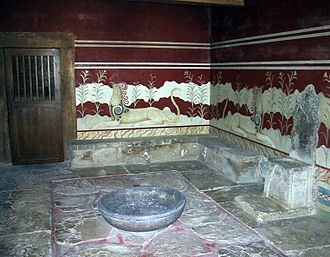

Well, this is the throne room, which is the center piece of the Knossos city/temple labyrinth.

There's also many Minoan coins with labyrinths on them; so, you know they thought these were interesting,


I point out the Minoan fascination with labyrinths because, when one is studying the underlying structural relations, one needs a clue of how to view that reality that is not what your first sensory perception tells you. In mathematics, clearly, one transfer the abilities already established from one domain to another - giving new possibilities, and putting the old possibilities in their place.

- So, how does all this relate to my connections between James Burke Connections and Jacob Bronowski's "Origins of Knowledge and Imagination"? Mathematical concepts are diagrams of how to solve a problem. But, they are symbolic diagrams. They idealize first. To get at nature at all, one has to idealize. Idealization is a first step. When one then transfers that ability to a new domain, one certainly gains initial new abilities. But, also, one gets new problems. For instance, when numbers are transferred to a geometric setting, one gets holes between the discrete number reality and the continuous geometric reality. One has to fill in those holes, first by rational numbers, then by real numbers.

Sunday, March 19, 2017

astro picture for the day/ Astronomy mysteries, Space Aliens, and Gods


Image Credit: NASA/JPL-Caltech/SwRI/MSSS/John Landino

I've related the hypothesis about the U.F.O. craze that started up right around the time of the space age and gods before. My Thursday, March 3, 2016 blog post - astro picture for the day/ "In Search of . . ." as a window onto the mythmaking mind.  This desire to read into things "aliens/intelligence/gods" just keeps going(not that any of these people read that blog post).

This anthropocentric interpretation of anything weird in astronomical phenomenon goes back long before the two examples I'm about to show.  Back in the 1960s, Joselyn Bell and her colleages at first thought the impossibly regular energy bursts they were detecting with their new radio telescopes must be Aliens, sending out messages to us. They originally called these radio bursts - LGM's, little green men.  Here's Jocelyn's wiki - > Jocelyn Bell wiki . Scrolling down to "Academic Career", we see "In July 1967, she detected a bit of "scruff" on her chart-recorder papers that tracked across the sky with the stars.[19] She discovered that the signal was pulsing with great regularity, at a rate of about one pulse per second. Temporarily dubbed "Little Green Man 1" (LGM-1)"  What she had in fact discovered were Neutron Stars - the compact remnant of a supernova explosion.   These were theorized before, but the theory seemed crazy at the time.  But, this craving to be saved by some intelligence has continued.

Around 2015, some astronomers were disturbed enough by a certain stars sudden brightening and dimming to suggest that, KIC 8462852, a star about a thousand light years away, must be Extraterrestrial Intelligences building a Dyson sphere.  A Dyson sphere is a kind of inverted solar collector completely surrounding a star.  So, the collective energies of the star is collected for as long as the star lives.  The smaller the star, the longer it lasts.  If you have a comparatively smaller star than our sun, this technology can feed a culture for trillions of years.  If you tap the energies of say a neutron star, or even a black hole, one could go for even longer periods, but that's beside the point here.   Here's the wiki - > KIC 8462852

Tabby's star, above, didn't get any E.T.'s.  So, the search has continued. Now, it's great radio bursts from billions of light years away. These impossibly energetic bursts must be E.T.'s accelerating solar sails to near light speed!  If not that, they must be E.T's, billions of light years away, trying to make contact with . . . us! Here's the fast radio bursts wiki - > fast radio bursts wiki Quoting from it(scrolling down to "Origin Hypothesis"), "Some have speculated that these signals might be signs of extraterrestrial intelligence.["

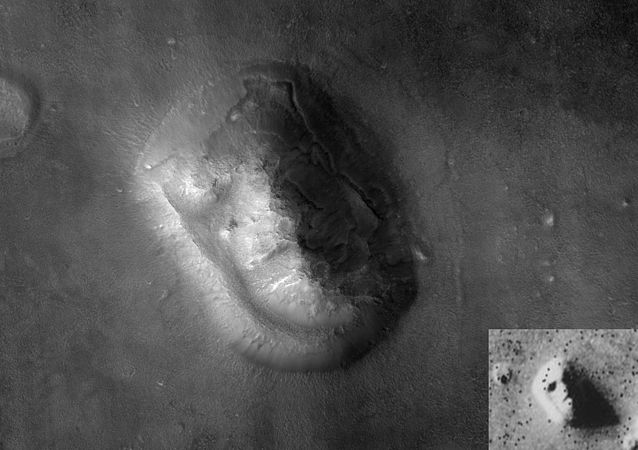
While I'm at it, let's show some. I remember meeting some fellow Avionic Tech back in my navy days. Me and this guy actually went out some some American Civil war park in Tennessee.  Somewhere in there, he related something to me.  I mean I'm talking science, and his scientific excitement is . . . the face from Mars. Googling "face of Mars" didn't take me long to find this wiki -> Cydonia (region of Mars) . The first image is this famous "face of mars."


I'm willing to guess that I don't have to point out which mound on this Mars image is the face of mars.

Here's the recent imaging of this face of Mars,


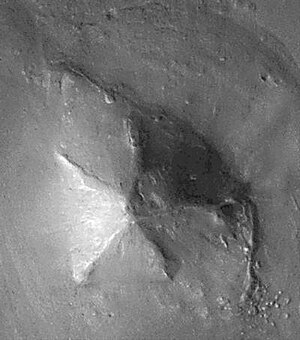
The wiki link provided above even shows what E.T. dreamers hope is an Alien pyramid,


I can't even keep track of how many times  I've seen at Yahoo news, people viewing images from the Jet propulsion laboratory, have found some impossible space relic somewhere on the surface of Mars. There must be some shiny piece of an Alien spacecraft off in the distance. It just never ends.

Even some of the most rationalistic futurists, like Arthur C. Clarke was fond of reading into astronomical phenomenon, some intelligence.  I remember reading in some writing of his that one of the asteroid moons is hollow.  Ope!  says Arthur C. Clarke it must be some calling card from an ancient Extraterrestrial Intelligence.  There must be a library of knowledge in there that these E.T's must have left us to save us from ourselves.

I don't feel like rereading Isaac Asimov's "Extraterrestrial Civilizations", but as time goes on, the book takes center stage.  It was the original "Rare Earth Hypothesis."  And, it's a great rationalists book about Extraterrestrial Civilizations. It points out that the mythologizing of god(s) of ancient times is the same as the U.F.O. craze of today.


Saturday, March 4, 2017

thought for the day - nanotech generalisation for Gospel of Truth - real life proof of fear


Image Credit: Rosetta OSIRIS-NAC


It's been awhile since I read Eric Drexler's chapter on A.I. in his "Engines of Creatoin."  So, I don't remember it all, and I don't feel like rereading it this very instant.  But, I recall him talking about how if someone uses a hammer, they view everything in terms of nailing things. I found a book, comparatively recently, called "Metaphors we live by" which is saying much the same thing that Eric Drexler says about the guy with a hammer.  That one often expresses, or understands everything in terms of some ingrained idea.  Intelligence is when one overcomes these very specific viewpoints.

If we are to make ethical anything, one should question everything.  One should seek the highest viewpoint. I agree with Jacob Bronowski, the highest viewpoint is mathematics. Understand how mathematics works, and understand how everything relates to that gives the wholistic viewpoint of everything else. I explain Jacob Bronowski's philosophy of mathematics a little bit here and there in my "Gospel of Truth."  But, for the most part, I concentrate on the mythology side first.

- My Gospel of Truth -  http://wwwscientifichumanism.blogspot.com/2017/01/gospel-of-truth-final-complete-version.html

---------------------------------------------------

before they had electromagnetic radar, they had stone sound radars to detect aircraft - http://www.thevintagenews.com/2016/07/13/radar-used-giant-concrete-sound-mirrors-detect-incoming-enemy-aircraft/

--------------------------------------------------------

quote for the day,

“Seldom do those who are silent make mistakes.” Uncle Eunar, in Norse Mythology

for here, The Sayings of Hár - http://www.asatru.org/havamal.html

- this is real life data - not just some movie dramatization.  A Pamela L. Gay quoted it . . .
“Seldom do those who are silent make mistakes.” Uncle Eunar, in Norse Mythology by This is a lesson we all need now and then.

- Scientists today, it seems have a psychological problem.  They're worried about loosing their 'reputations' if they say one wrong thing. Wait a minute, how do we come up with a new idea if one doesn't come up with new ideas?  One should loose their reputations if they don't test their new ideas, discard it if it doesn't fit the data. Or, they should loose their reputations if they don't try daring new ideas.  If they hide behind all kinds of evasive language.

    Either through childhood experiences or they never learned the scientific spirit in the first place of being excited by new connections/ideas, the fact that scientists today are afraid to point out irrationality is proof of the power of the dark side of the force. My pun on all this fear/evasive language I've been pointing out.

fear/evasive language . . . Planet of the Apes

Astronomers have this volcano named specifically - Tvashtar Paterae. This video of an Io volcano was taken by the New Horizon's spacecraft.  The spacecraft that went on to image Pluto/Charon for the first time.

As with my "Invasion of the Body Snatchers" post, just below, see my Sophie and Silas post if you haven't seen it, or don't know what I'm talking about.

I'm amazed at seeing these great dramatizations of fear and irrationality from, probably non-mathematical scientists.  Maybe mathematical scientists don't have time to put these types of things together. People are generally too busy to stop and notice things.  It takes stopping to notice things.

I like to point out how a stream looks chaotic.  But, if you manage to pick a point upstream and follow it down about the same speed as the stream, suddenly a simple, stable pattern is revealed. It takes this type of stopping ones busy life to notice things, to do mathematics, and to notice these fear and evasive tactics. 

Anyway, let's do the Planet of the Apes movie highlights of fear/evasive language . . .


Here, Dr. Zaius, who's in charge of both the science and religion of the Planet of the Apes, comes in to see Taylor(the caged human who can talk). Dr. Zaius uses evasive denial language when he says "he has a talent for mimicry." Zira, the female Ape of behavioral science is stunned at the close-mindedness.  Dr. Zaius says "it's a question of survival."  Well, that's what's left out of this movie clip.


In the above outdoor cage scence. Taylor writes in the sand.  A Ape soldier says "I don't get it; what's Zira trying to prove?"  Dr. Zaius replies "that man can be domesticated" at which both laugh it off.  Dr. Zaius notices and then erases Taylor's writing in the sand.

- Some scenes not readily found on youtube right now . . .

Taylor is with Zira and her boyfriend/archaeologists Cornelius.  Taylor writes some letters(because he can't speak due to an injury); but, Cornelius is shaking his head in denial.  Zira is saying "don't you believe your own eyes?"

Taylor has a court hearing with Dr. Zaius and all his fellow believers.  Dr. Zaius tests Taylor by saying "what's the second article of the faith". I feel like I need to rewatch this part. Dr. Zaius is trying to disprove Taylor's story, and Dr. Zaius just thinks that if the ideas are not already expressed in the scripture, then don't listen to new ideas. - Cornelius starts reading Taylors letters, because the Court has already banned Taylor from doing any writing(which would prove his case).  They then stop Cornelius from finishing Taylors written testimony.

Taylor has a private talk with Dr. Zaius.  A highlight is Dr. Zaius says there's no conflict between science and faith - so long as the science is in support of the religion.


Here's the famous statue of liberty scence at the end of the Planet of the Apes movie. Dr. Zaius destroys the archaeology dig where Cornelius was digging to hide the evidence of a pre-Ape/Human world.  This is like Pres Trump today who want to shut up climate scientists, burn the books. If one tries to operate a piece of technology with illogical concepts, the machine doesn't work - in computer programming, this is called a bug. If one destroys rationality and science, then the science/technology world will fall apart.

fear/evasive language, and . . . Invasion of the body snatchers


Copyright ESA/Herschel/PACS, SPIRE/Hi-GAL Project. Acknowledgement: UNIMAP / L. Piazzo, La Sapienza – Università di Roma; E. Schisano / G. Li Causi, IAPS/INAF, Italy


More evasive language I've been finding that proves fear of thinking(for whatever reason) found in the movies "Invasion of the Body Snatchers."  The 1978 version even features Leonard Nimoy.

For those who don't know what I'm talking about, check out my Sophie and Silas post - Jun 8, 2015 post.

- The Invasion of the body snatchers is a kind of parable of how people pick up ideas and become cultish.  Of how people become conditioned in a given culture and incrowd.  Of how, if someone doesn't go with the cultural flow, they get pointed out.  This all seems surreal; but, the following Biblical quotes proves it!

2 Thessalonians3:6 Now we command you, brethren, in the name of our Lord Jesus Christ, that ye withdraw yourselves from every brother that walketh disorderly, and not after the tradition which he received of us."

and another, "3:14 And if any man obey not our word by this epistle, note that man, and have no company with him, that he may be ashamed."


Well, the first scene I can find that corresponds to my notes is the rat terd scene,


Here, Donald Sutherland, who plays Matthew, finds a rat terd in the food.  The owner uses evasive language, being in denial, and calls it a caper. Some of the rest of the scene that is not shone are the restaurant chefs acting offended at Matthews presence.  Then, when Matthew finds the rat terd, they go and egg his car.

One of the main characters, Elizabeth, explains to Matthew that her punk husband has changed.  She followed him once and noticed he's with others and they're all passing around seed-pods. This reminds me of religious people who run around passing out bibles.  - I further noted that this passing around of seed-pods is like Eric Drexler's "disruptive".  Everyone gets in the act - to be cool.


The scene above is a guy who's trying to whistle blow; but, Matthew just blows him off.  He doesn't want to think there's a problem.  He's a bit cowardly here.  The whistle blower runs and gets hit by a car.  They turn the corner, and they see everyone looking at the whistle blower in a rather empty feeling way. They're all the converted.

- There's a scene where Matthew is calling Elizabeth's huspand.  The husband doesn't say anything.  He just listens and hangs up so that Elizabeth can fall asleep and wake up as one of the pod-seed people.


Elizabeth tries to get one of the pod-flowers tested.  But, her boss is uncooperative.  He asks "how" and tells her "you're consistently late".  He doesn't want the flower tested.  He doesn't want information to get out until the pod-seed invasion of the body snatchers conspiracy is in full swing.


The above is kind of a central scene. Matthew and Elizabeth are found by the now converted Leonard Nimoy and some others. Leonard Nimoy and the others say, "It's so much easier if you just convert."  Then, they make a bunch of evasive spin doctor talk - "all are one", "born into an untroubled world", "no fears or anxiety", "no room for hate . . . or love", and "don't be trapped by old concepts."


This last scene is kind of famous amongst "Invasion of the Body Snatchers" fans. Earlier in the movie, when he, Elizabeth, and his other friends are running away from the pod-people, they learn that if they just act like the rest, they can walk amongst them - unnoticed.  The last scene is a play like Matthew has perfected this. One of his friends finds him and thinks he must know how to walk amongst the drones as well.  But, to her horror, Matthew screams and points to her, signaling to the others that he's found someone who's walking disorderly.


Monday, February 20, 2017

astro picture(s) of the day


Image Credit & Copyright: Ivan Eder

This picture has Cygnus X-1 - the first black hole discovered, in the 1970s. The blue bow shock is from the black hole's affect on the surrounding nebula.


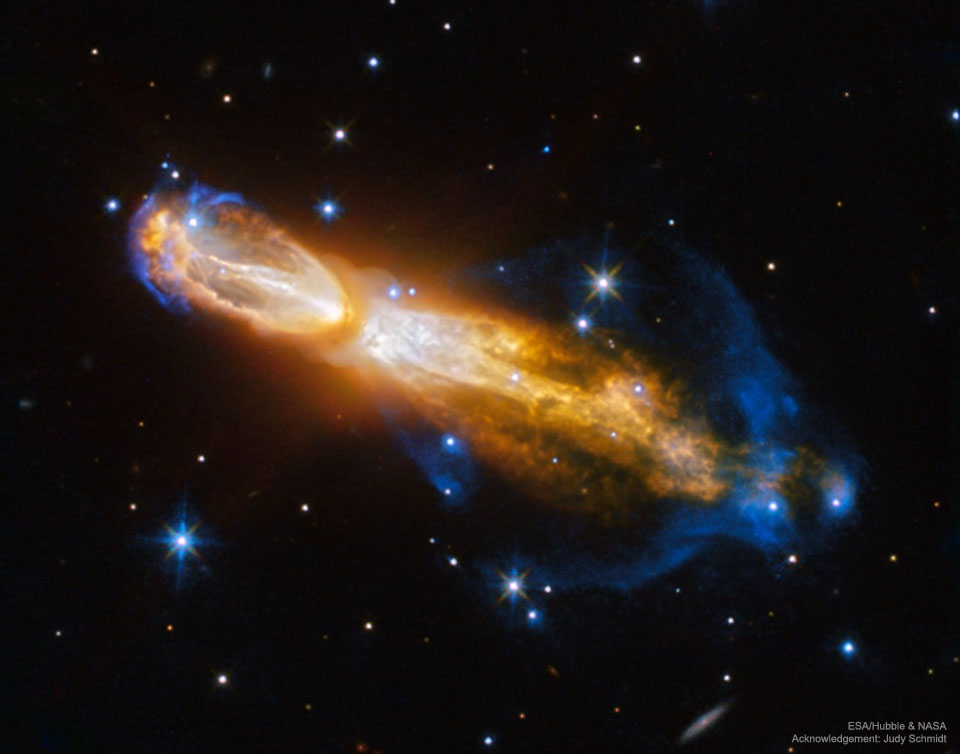
Image Credit: NASA, ESA, Hubble, MAST; Acknowledgement: Judy Schmidt


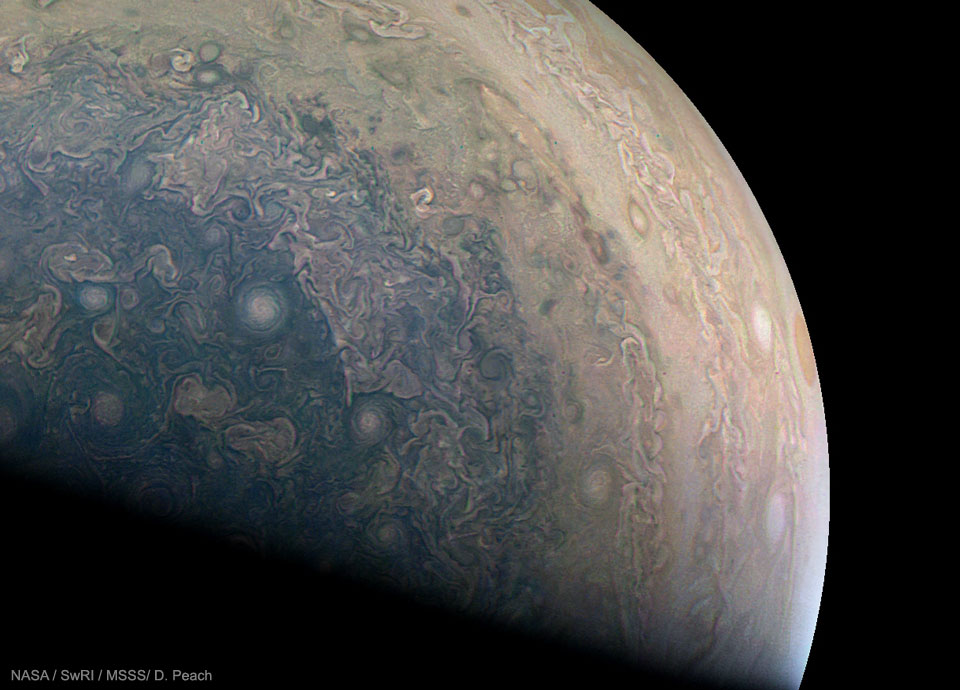
Image Credit: NASA, JPL-Caltech, SwRI, MSSS; Processing: Damian Peach

another great new picture of Jupiter from the Juno spacecraft


Image Credit: ESO, VLT Survey Telescope


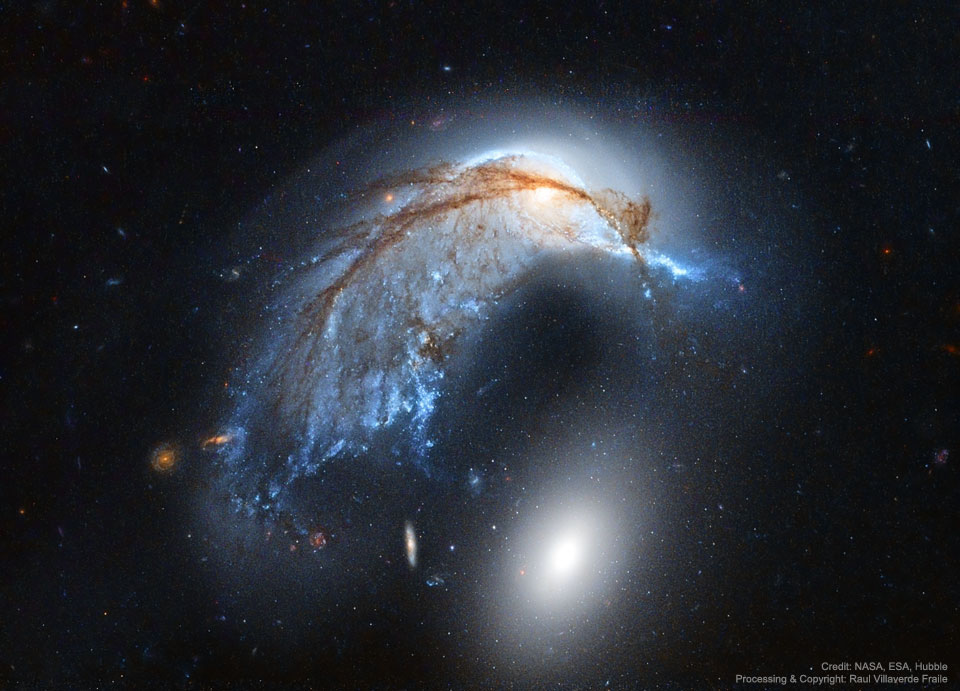
Image Credit: NASA, ESA, Hubble, HLA; Reprocessing & Copyright: Raul Villaverde


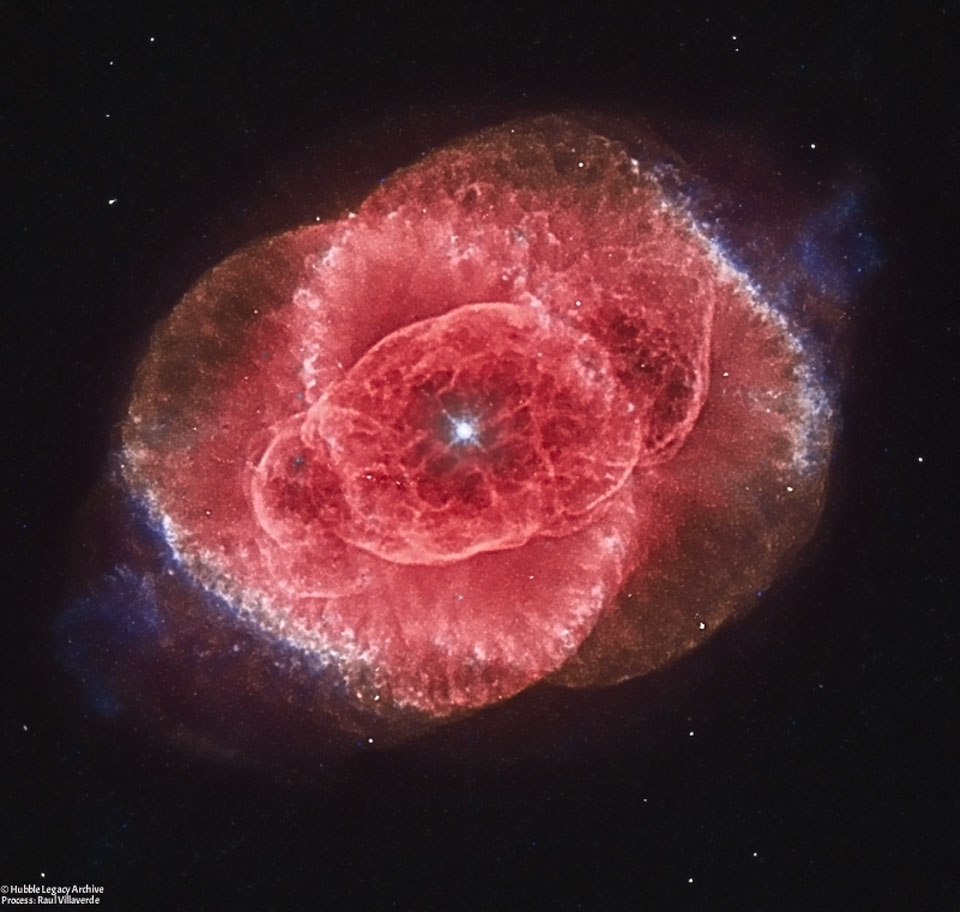
Image Credit: NASA, ESA, Hubble, HLA; Reprocessing & Copyright: Raul Villaverde


Image Credit - NASA/ New Horizons

Image Credit - ALMA observatory - , ,


Image Credit - ALMA, , ,


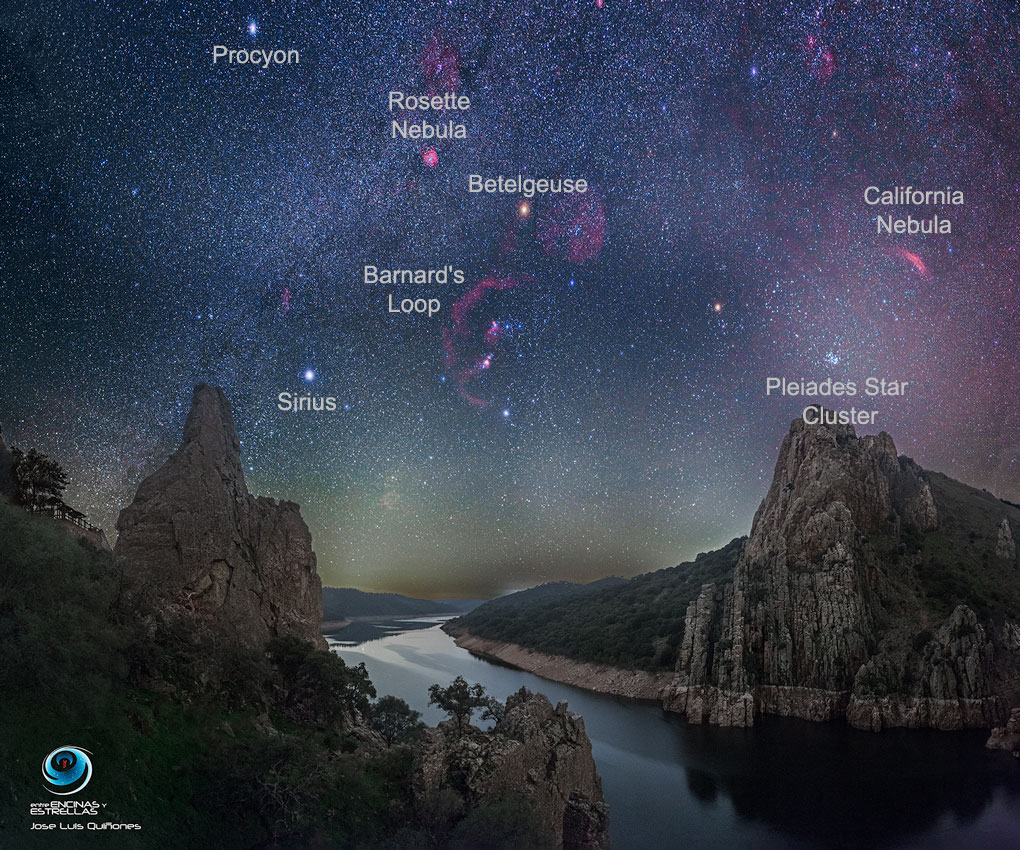
A Dark Winter Sky over Monfragüe National Park in Spain
Image Credit & Copyright: José Luis Quiñones (Entre Encinas y Estrellas)

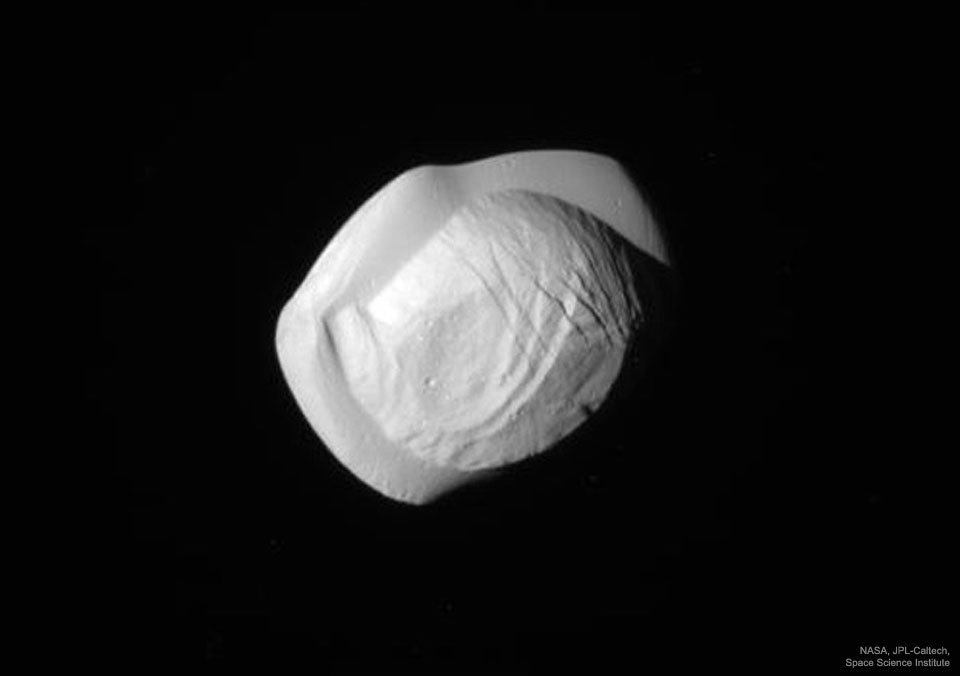
and for the craziest astronomical discovery possible, a moon of Saturn!


I shit you not!


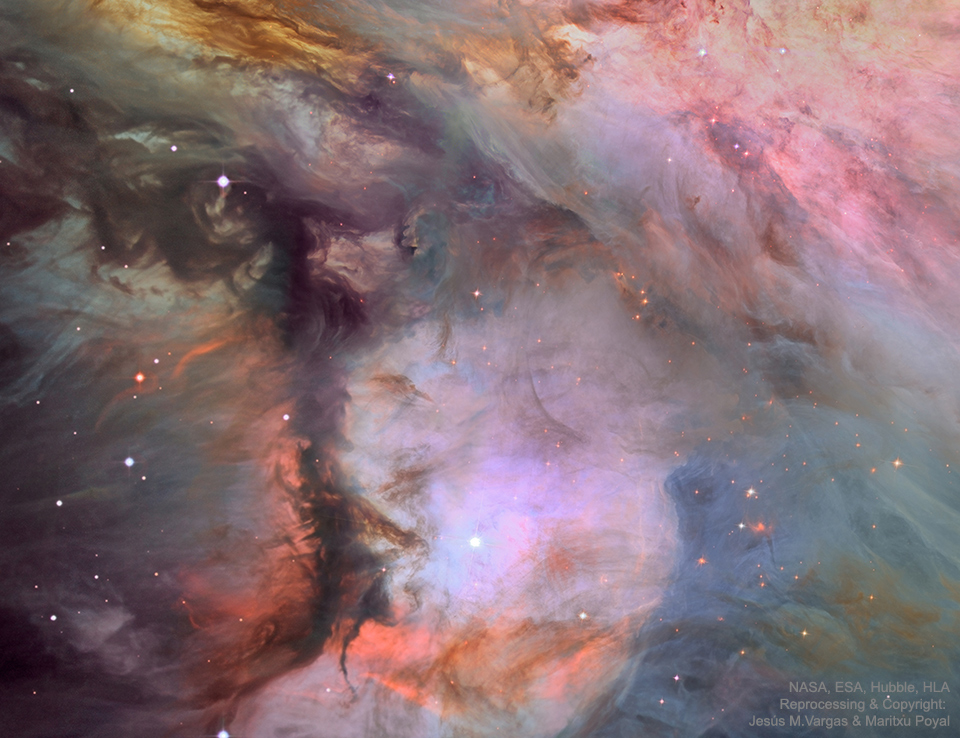
Image Credit: NASA, ESA, Hubble, HLA; Reprocessing & Copyright: Jesús M.Vargas & Maritxu Poyal


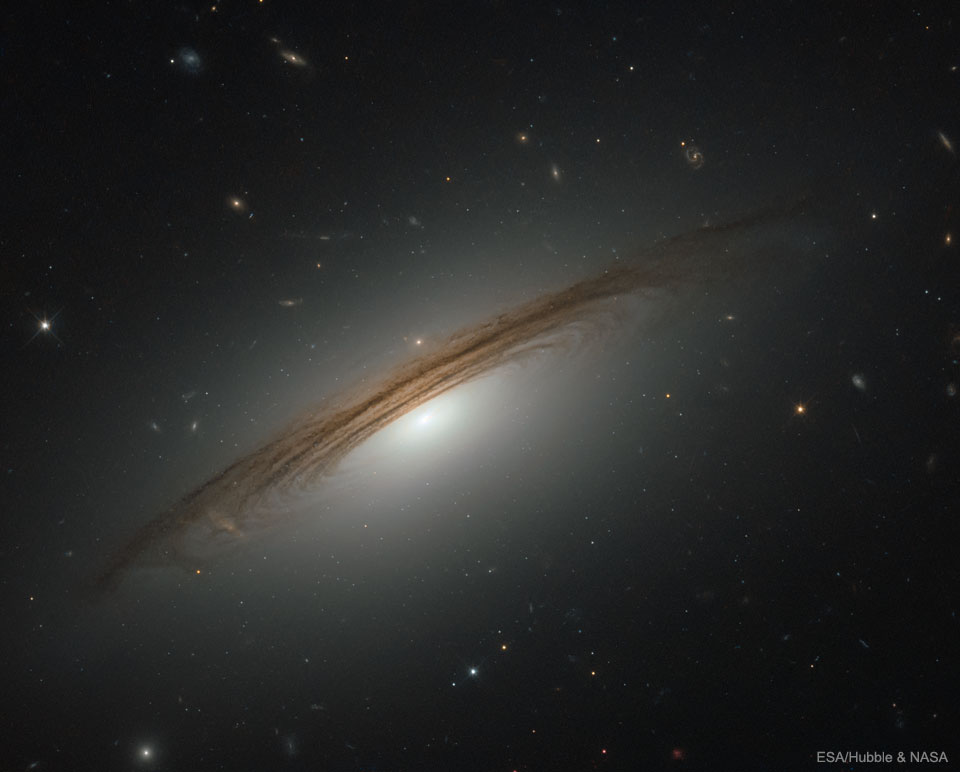
UGC 12591: The Fastest Rotating Galaxy Known
Image Credit: NASA, ESA, Hubble


Image Credit & Copyright: Alyn Wallace Photography

One of the best Aurora pictures I've seen.


Credit:
NASA, ESA/Hubble . . . i'm not sure that these images are zoomable enough for my readers actually.  One should go to at least one source of my astro pictures - ESA/NASA Hubble Space Telescope and click some of the downloads on the right hand side.  Zoom up pretty close -just before you see pixels and roam around.  There's also a zoom movie at this link - > New Hubble image of Kleinmann-Low Nebula

Note further that the ESA/NASA Hubble Space Telescope webpage names this Kleinmann-Low Nebula, and not just Orion nebula.  The Orion Nebula has this Kleinman-Low part, and the Horseshoe nebula at another part.  You can see this viewing the zoom in movie at the link above.


Wednesday, January 25, 2017

astro picture for the day/ Juno spacecraft's Jupiter "Great Red Spot"


Image Credit: NASA/JPL-Caltech/SwRI/MSSS/Gerald Eichstaedt/John Rogers

Acharya S "Respect my Religion"


Acharya S worked hard to reexplore and re-present the sungods astrotheology over the last few decades(since about 1999). Her "Christ in Egypt" and "Did Moses Exist" put her in a class all her own. There were some before her in the 1980s like Wells, and in the 1990s, there was Earl Doherty. I suspect her SunGods book might be a good read also.  I haven't read it yet. Remarkably, she died on Dec 25th, 2015.  The birthdate that so many sungods have.

I found her a bit temperamental, actually.  I remember trying to explain to her that Jacob Bronowski explains, in his "Science and Human Values" that mathematics and poetry share a common feature in analogy. And that mythology is also . . . poetry. She went off on a anti-rationalist tirade and even compared Spock to the devil and such. I posted a bunch of her findings, from her "Did Moses Exist", all based on confirmations of primary sources, and she comes in under some other name and says I'm plagerizing!  I know she delt with a lot of people; but, man, me and her never got along!  I mean she didn't "respect my rationalist religion".  She didn't stop to consider the ideas, either refute them with factrs or logic, or find them right after facts/logic.  Instead, she goes into some really weird psycho mode. I just can't help posting this great video of hers!  Some thought for the day along with this great new picture of the Great Red Spot of Jupiter!