Monday, January 25, 2016
Marvin Minsky has passed away
Here's a link to a video and short article --> Marvin Minsky Reflects on a Life in AI
Marvin Minsky did a lot. He innovated a confocal microscope, or improved it. His wiki shows that he served in the navy for a time as well. As I like to point out, Arthur C. Clarke mentions him in his 2001 movie. Well, I guess Marvin counciled Arthur in the book. I'm not sure what. Marvin Minsky saw that Eric Drexlers(and Richard Feynman's) nanotechnology can go a long way to making genuine A.I., and of course supported Eric Drexler's efforts more so than many throughout the years.
Thursday, January 21, 2016
astro picture for the day/ Mary Magdelene extra
Image credit: NASA & ESA, Jesús Maíz Apellániz (Instituto de Astrofisica de Andalucia)
The absence of any mention of Mary Mandelene by Paul in his epistles is more conclusive proof that the Gospels were written after the Pauline epistles.
astro video for the day/ Paleontological and Anthropological mysteries extras
- Paleontological and Anthropological mysteries,
link -->New World monkey The mystery here is how did monkeys get from the old world(Africa/EurAsia) to the New World Americas? The link indicated points out the wildest idea, that monkey's actually rafted their way across the, then, smaller distance between Africa and South America. The other alternative is that there must have been a land bridge due to lower sea levels. In the end, they say the Monkey's rafted from one island to another! The question becomes, why don't they raft around anymore?
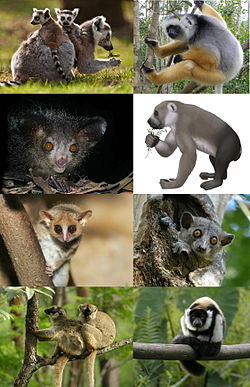
I recently saw a tweet of a Gorilla sized Lemur. Below are pictures of today's Lemurs.
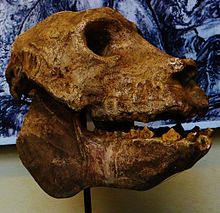
These were along the line to primates millions before the first bipedal Australopithacines. A fossil a Archaeoindris,
The gorilla sized Lemur, or Archaoindrus appear to be related to the also now extinct Sloths.
When I heard of this, I wanted to get back to the Balboa park 'Museum of Man' museum in San Diego, where I remember seeing this giant something. I finally did so a couple of days ago. What I found was a Gigantopithacine.
Gigantopithacus,
In fact, this is a picture of the Museum stuffed thing(I'm forgetting what they call stuffed animals) in the San Diego museum of man. What the info they give on it says is that it went extinct 400,000 years ago . . . contemporaneous with Homo Erectus!
The Wiki points out something even larger - Gigantopithacus Blacki. Once again, a picture from the wiki of Gigantopithacus,
The wiki says that G. Blacki went extinct in Asia 100,000 years ago - contemporaneous with Homo Sapiens!
- A primate species on the path towards science/technology dependent species like 'Homo Sapiens'? - Pan troglodytes verus, the latin name of a western Africa subspecies of Chimpanzee does a few odd behaviors compared to the rest.
I for one have noted that Homo Erectus and other related species of it's time, lived in caves, and that most primates I've ever heard of don't. Cave dwelling seems to be a behavior suggesting unusual intelligence over other life(obviously there's things like bats, some cats/bears and so on); but, living in a cave can provide a place to think where on the outside, one is so busy worrying about this/that predator, or bugs or weather . . . in a cave, one doesn't have that much to worry about. The mind can wander around a bit more.
This cave dwelling chimpanzee also uses spears. I've heard of little sticks to dig out ants, and I would argue that is technological(some people don't); but a spear? That's a bit more of a technology that is indisputable.
Another odd behavior noted in this wiki --> Pan troglodytes verus - another species evolving down the line towards science/technlogy intelligence? , is swimming. Most primates, if one of their's falls into a lake, will just scream and run around on the outside, and the one that falls in the lake just drowns. Swimming in a lake is a sign of intelligence; the abilty of a species to do something it's not evolved for.
This species is apparently endangered!
Monday, January 11, 2016
astro picture for the day/ Steven Weinberg quote
Image Credit: Cassini Imaging Team, SSI, JPL, ESA, NASA
This is a picture of a Saturn asteroid/moon. It's actually considered a sheppard moon; it makes for one of the major rings of Saturn. Scientists theorize that the structure of the Saturnian rings is much the same, only smaller moons shepparding thinner rings . . . all the way down to the smallest particles of the rings!
"in a way, it's more freer . . . in a way, it's more noble, and more admirable to give point to our lives ourselves rather than to accept it from some external source." - Steven Weinberg
- found some interesting lost technology history - the Photophone
Here's a picture of a Photophone. It was invented by Alexander Graham Bell around 1880. It used modulated light to transmit sound. It was the first wireless communication - back in 1880! There was a mirror that flexed based on sound applied to it. This created modulated light sent to another photophone. So the transmitter was non-electrical; but, the receiver was electrical. The receiver would take in the modulated light and create a modulated electrical signal, which then gets turned into sound.
The Marconi radio started to surpass the Photophone around 1897. The Photophone was still in military service during the 1950s.
For more on the Photophone --> Photophone Wiki , there's also a link of the connections between the photophone and sound recording. Remember the silent films?
- and there's new more or less advanced technology/science to report. By now, maybe you've heard that scientists are excited about the possibility of detecting gravity waves.
Gravity waves have been known to exist since around 1989, when astronomers found that gravitational energy was being sapped by light energy released by two pulsars orbiting one another . . . well, looking up this wiki, Gravitational-wave astronomy , I found that astronomers detected the effects of gravitational waves in 1974, by a Richard Hulse and Joseph Taylor; they were awarded the Nobel prize in 1993! Since then, astronomers/engineers have been building new laser gravity meters . . .
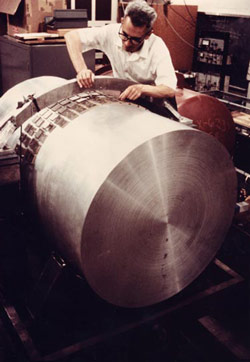
They tried building hugh metal cylinders first;
Joseph Weber and his gravity meter. The wiki on Joseph shows that he managed to get NASA to put a gravity meter on the moon, on the Apollo 17 mission! When you look at this gravity meter, and learn about today's efforts, you just know that he wasn't successful.
- this seems to be a famous picture of one of LIGO's mirrors . . .
I've heard these mirrors bury any astronomical telescope mirror ever constructed in reflectivity. Wish I could find that article again. Physicists also made a major technological breakthrough to make "Advanced LIGO." I've found that the optics have a roughness of .16 nanometers(that's less than the width of an atom). But the squeezed light is really exotic physics/technology
LIGO, and any interferometer gravity meter(this is what's different between Joseph's gravity meter and gravity meters like LIGO) must isolate as much environmental noise as possible - thermal and . . . quantum noise. Quantum physicists found a squeezed light that allows them to reduce quantum noise. The squeezed light comes from making a squeezed vacuum state from which the light comes. LIGO then injects these squeezed light/lasers into the vaccum tubes where they bounce off those super fine mirrors.
Advanced LIGO, as they call it, can detect pulsars and other gravity wave phenomenon out to the distance of the Virgo galaxy cluster. The 21st century should have much the same excitement of 'the newest, most grandest gravity-meter than burries the earlier gravity meters in how far it can see dectect gravity waves' in much the same way we saw telescopes of the 20th century!
Gravity-meters can test inflationary Big Bang cosmology, string theory and look at the physics of black holes, pulsars, supernova like never before!
- right on the heels of Advanced LIGO, is LISA, a space orbiting gravity-meter interferometer that is scheduled to go in orbit in 2017! If we're getting gravity waves detection now, 2017 will be really exciting! Then there's the James Webb space telescope to be placed at one of the lagrangian points.
- here's a pretty good article on the quantum physics and inflationary big bang cosmology science that gravity-meter interferometers will allow us to explore! --> Sounding out the Big Bang
Monday, January 4, 2016
astro picture for the day / Galileo quote for the day
Credit:
ESA/Hubble & NASA and S. Smartt (Queen's University Belfast)
Quote for the day
"Philosophy itself cannot but benefit from our disputes, for if our conceptions prove true, new achievements will be made; if false, their rebuttal will further confirm the original doctrine." - Galileo Galilei
Here's some fun mathematics
Boy's surface maps a projective surface into three dimensional space. A boys' surface uses three Mobius strips as well. If you don't believe in higher(and lower!) dimensions, you haven't studies topology(or even Mobius strips) enough!
William Boy's surface was found after David Hilbert suggested to him to find a that immersing a projective surface into three dimensions was not possible!
Boy's surface is a stepping stone to turning the sphere inside out as well.
Monday, December 21, 2015
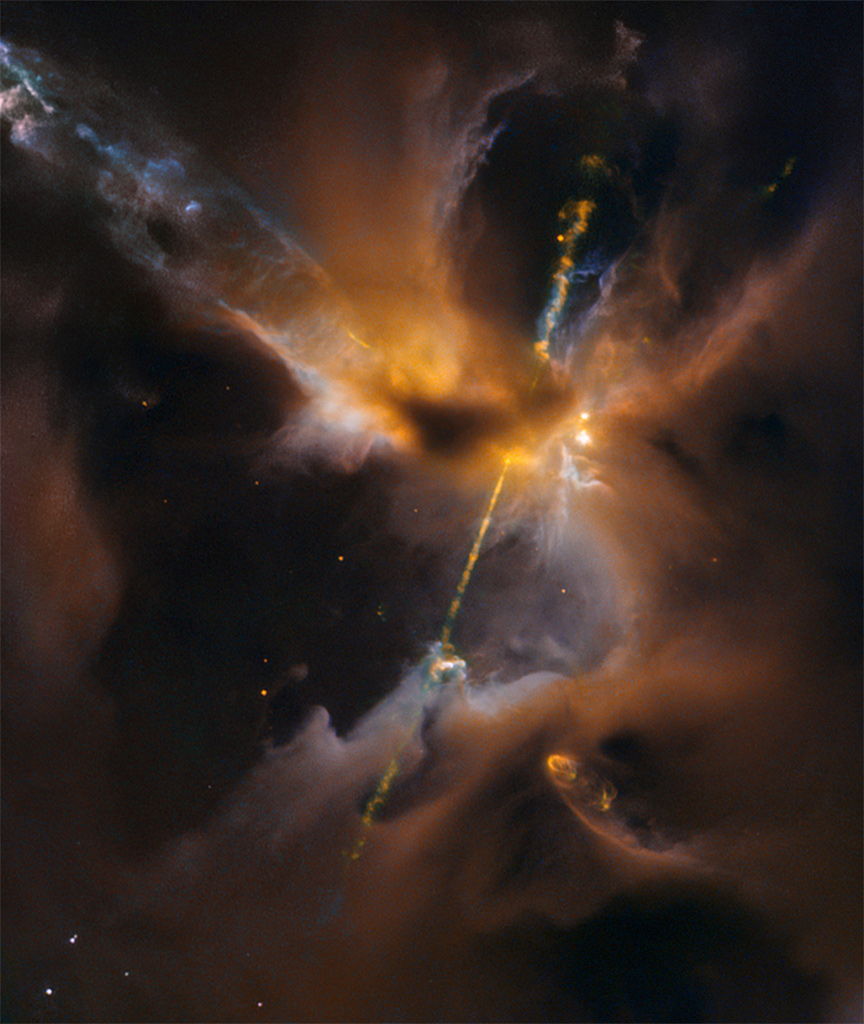
astro picture for the day/ Galileo quote for the day
Image Credit: NASA, ESA, Hubble Heritage (STScI / AURA) / Hubble-Europe Collaboration
Acknowledgment: D. Padgett (GSFC), T. Megeath (University of Toledo), B. Reipurth (University of Hawaii)
"Though the difference between man and the other animals is enormous, yet one might say reasonably that it is little less than the difference among men themselves . . . Such differences depend upon diverse mental abilities, and I reduce them to the difference between being or not being a philosopher; for philosophy, as the proper nutrient of those who can feed upon it, does in fact distinguish that single man from the common herd in a greater or less degree of merit according as his diet varies." - Galileo
- Blue Origins and now SpaceX have successfully landed their rockets back on earth. This makes for increased reusability and to dramatically lower the cost of spaceflight. One could imagine space elevators to reduce space access even more, but that's maybe ten or more years down the road(yes, times goes by fast!). Here's some youtubes that show these historic events.
Blue Origins was first,
SpaceX just landed their's . . . after like two or three failures. It'll be exciting to see how fast a turnaround time these companies relaunch these space rockets. There's also other exciting space companies to make space colonization/exploration more possible and free of governments who are politically tied down. There's Bigalow inflatable space stations, there's asteroid mining companies. Anyways, the SpaceX video,
Wednesday, December 9, 2015
astro picture for the day/ Thomas Huxley quote for the day
ESA/NASA Hubble Space Telescope image
"the fundamental axiom of modern science... In matters of the intellect, follow your reason as far as it will take you, without regard to any other consideration" - Thomas Henry Huxley
- some exciting science/tech news for the day,
Germany has created a Stellerator that looks to be the first working nuclear fusion reactor.
They're putting in Helium to fuse for this month, then hydrogen in January. It's passed all running tests so far. It would be a surprise if it didn't work.
Subscribe to:
Posts (Atom)