Monday, June 23, 2014

thought for the day/ Frontiers of Flight aeronautical documentary


One could argue that the dream of flight goes back to the invention of the bow and arrow tens of thousands of years ago. I've never heard of Egyptians/Mesopotamians who ever thought of creating a flying machine; but, it's well known that a Greek mathematician tried to create a mechanical bird; the ancients are unanimous that it worked/flew! You're free to believe if you want! Probably the best contribution Archytas did was to create an exotic  by means of the intersection of three curves - a cone, a cylinder, and a tore(or a ring); this he created to solve the dupblication of a cube problem.  The next person we know of who tried imagining a flying machine was Leonardo Da Vinci!

I don't think I know the history of efforts after Leonardo's time; but, many did.  They famously tried to duplicate the movements of birds. They made gliders of various success. There was also the great balloons of the 1800s.  As the video above shows, it was two bicycle engineers who succeeded. The video is good enough, that I don't need to point out much more about their technical accomplishments that allowed them to make the first successful powered flight. But, I would like point out two things that I didn't feel was stressed enough throughout the great video series.

The wright brothers, as the video does mention, came up with the first wind tunnels. The wind tunnel technology was pushed to great lengths. They've developed wind tunnel technology to such a degree that they can experiment all the flight characteristics of an airplane before the airplane ever takes flight. I'm not sure if I'm even expressing this well enough. They've got supersonic wind tunnels, changes of air density tunnels, turbulent flow.

Another topic that wasn't stressed enough through this video series was the early interplay between airplane engines and automobiles.  I don't think even in this first episode it was mentioned that the wright brothers engine was an advance that allowed them to succeed.  The engine was considerably lighter than any engine before, including automobile engines.  But, piston engineering advanced from there. The automobile engines engineers soon made engines powerfull enough that they could put these bigger heavier engines on aircraft and successfully fly. It's pretty amazing how fast the prop planes and speeds advanced after the Wright brothers.

Well, another piece of the prop planes not talked about enough in my opinion is the propellers.  They were aerodynamically designed even by the Wright brothers. Propeller aerodynamics were an area of advancement all through and even up to our times. The propeller acts just like the wings of an aircraft; the shape of the wing has the air going faster or slower either below or above the wing depending on shape and flaps(I've never seen flaps on propeller blades!).

The automobiles generally stuck with piston engines. But, the aeroplane went turbine.  That's what a jet engine is; it's a turbine powered.  One could say that a prop plane is turbine powered, but in a jet engine, the turbine is not powered by the pistons.  The turbines are spun up to be able to suck in enough air to power themselves.  And they generate high and low pressure in the jet engine which powers the plane.


The jet engine is like the difference an arch is to the beam and column for architecture. It allows one to do things for aeroplanes that couldn't be done with prop planes.

An historical curiosity with the Jet engine is that the Jet engine was the third English technology they were not able to take advantage of. The first was industrial machine tools(see James Burke's connections episode 5 I do believe), the second was colored dyes(which the Germans took advantage of; see James Burke's Connections episode 7), and now Whittle's jet engine innovation was developed mostly by the Americans and Germans of world war 2(another topic not discussed in this video series is the swept wing innovation of the Germans during world war 2).  Whittle allowed the Americans to develop the jet engine during world war 2 when the British themselves decided not to fund it! And Drexler and Co have a problem with me pushing scientific humanism . . . ! Anyways . . .

Frontiers of Flight documentary also has the best documentary episode about the beginnings of space rocketry.  They have the most about Robert Goddard and they mix and relate Robert Goddard's relationship and influence on the German rocketeers.


Frontiers of Flight also has great episodes about the developments of airplanes after the Wright brothers(mostly by the French early on).  There's cute stories about early American pilots taking airplanes hardly more advanced than the Wright brothers going cross country! I like the comment by some girl who was invited by Charles Lindeberg that she "didn't think airplanes were going to stick."  She thought they were just the latest fad that won't last!  If you didn't appreciate Charles Linedberg before you see the episode about him here, you will after that one! 

The episodes about the Bell X-1 and the X-15 and the glider plane that led to the space shuttle are pretty good as well. I didn't bother watching the episodes about sports planes(what little I've seen suggests it's a pretty good episode), or the commercial flight episodes.  I've watched a boeing biased ten episodes about it.  I bought the boeing dvd while studying the Boeing C-40(a military version of the Boeing 747 of today) up in Seattle, Washington.  It's not to bad actually. That's kind of where this documentary is probably not so great.  It doesn't show the shear abundance of different aircraft created over the last century - both prop planets and jet aircraft.  No F-4, F-15, F-16, F-18 and so on . . . all the other X-planes, the variety of Russian aircraft, British and French and so on and so forth. 

Today, scramjets are the frontiers of flight; and here, it looks like the British have taken the lead and look to take advantage this time. Here's a link to the Skylon, Sabre engine; a rocket/scramjet hybrid


astro picture for the day / Bourbaki quote


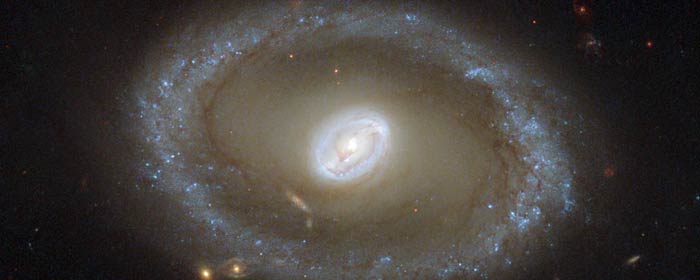
ESA/NASA Hubble Space Telescope image

quote for the day,

"Since the earliest times, all critical revisions of the principles of mathematics as a whole, or any branch of it, have almost invariably followed periods of uncertainty, where contradictions did appear and had to be resolved . . . . there are now twenty-five centuries during which the mathematians have had the practice of correcting their errors and thereby seeing their science enriched, not impoverished; this gives them the right to view the future with serenity." - Bourbaki

In some exciting quantum computer news,

Quantum physicists find a way to turn on quantum computers 72 times faster

Quantum computers are of course very sensitive to the environment, and quantum physicists have had to get down to the bottom of every parameter, temperature, vibrations, gravity, quantum parameters like electromagnetic affects and so on.  They've had to measure these things and get the quantum experiements set up for hours every day; now, these guy's report getting this procedure down to five minutes . . .


Friday, June 20, 2014

astro video for the day / quote for the day


Quote for the day,

"The dreams of today, are the realities of tomorrow" - William Goddard

- Science/Technology news extras,

Metabolic map of human body created . This metabolic map can go a long way to determining correct targeting of drugs/chemicals by doctors.

3D Systems’ Fab-Grade 3D Printers Break The Speed Barrier Surpassing Traditional Injection Molding

The ability to 3d print macroscopic objects in seconds instead of hours should make 3d printing very practical indeed. Of course, SpaceX is already making some of their rocket using 3d printing; now, 3d printing is far less expensive and hence can be used to make the rest of their space technology!  Of course all other space companies can make their space rocketry.

Monday, June 16, 2014

Astro picture for the day / quote for the day


ESA/NASA Hubble Space Telescope image

Quote for the day,

"Leave no stone unturned" - Aristotle

Friday, June 13, 2014

thought for the day/ Pottery as Art in ancient times and Angkor Wat


This is reportedly a Minoan pottery


This figure eight handle pottery gets back to Minoa, Crete again.


Minoan again


The second pottery above and this one have geometric patterning which was a predominantly later classical Greek artistic style.


This pottery has a picture of Jason bringing a golden fleece.


These three potteries are Mycenean


I've really gone at posting as many different Greek pottery to show the great creative variety in the Greek pottery art.  Some are distinctive and creative in shape, others have great art on them; some have both. It's noted that there's not much in the way of classical Greek paintings; but, they did their art on Pottery.

Pottery goes back tens of thousands of years ago; but, the Mesopotamians innovated the flywheel that clay is set on.  The flywheel is spun leaving the hands to shape the clay as it spins. This allowed the ancients to mass produce pottery. The Greeks turned it into high art.

Between the great flywheel technology to make pottery and the free play of patterns on them, the Greeks became inspired to mathematics?  Well, it's a nice thought. But, another great point is a society that gets inspired by something from another society.  Here, we have the Greeks taking from the Mesopotamians. I've found another remarkable cultural renaissance that took the best from another culture in Angkor Wat.


This isn't the video I saw; but, it's do!

- 14Sep2015 edit/thought,

People can or cannot solve problems based on what's already in their heads.  It's like playing one of those maze video games, where you're going through the maze, and some of the maze is shaded out because you haven't done something to light up those parts of the maze.  When people built the Stonehenge(s), they obviously had enough knowledge of the seasons to organize the stones as markers; but, 1) they built and erected the stones with stones and wood, not metal. They also obviously didn't have the mathematical knowledge to shape the stone. When people built the Pyramids around the same time, they obviously had the mathematical knowledge to more or less make things in straight lines where needed.

- Why did they build the Pyramids, or even Stonehenge, and not something else, like a telescope, or an automobile?  Because those are problems they don't even know exists!  And I would go so far as to say this is the problem of those who believe in gods to solve their social/psychological problems and not science.  Those superstitious people don't know reason. They don't know what facts or logical reasoning is. They don't know it's even possible.  They don't trust it; they become fearfull.

- What's of course interesting about Angkor Wat is how a people far away from contact with advancing cultures, totally picks up on a whole knowledge base, from another culture that probably had to do through various stages to be able to construct architecture like that. This phenomenon is related to how a person grows up in a culture; takes on the dress, style, and tone of voice of a culture.  It says something about the human brain; what that is, is still a bit of a mystery.

- Getting back to the Greeks . . . The Mesopotamians and Egyptians created a certain amount of mathematics far beyond the numbers of hunter gatherers before them(that came from tens of thousands of years).  But, they stalled.  Why did the Greeks get infatuated with it and continue?  Because they grew up with different ideas in their heads that didn't stop them from advancing.  After awhile, they did stop advancing. 


Tuesday, June 10, 2014

astro picture for the day / Geminus quote for the day


ESA/NASA Hubble Space Telescope image

- Quote for the day

"With men of course, the necessities of life are often causes  of slowness and swiftness; but with the imperishable stars it is not possible  to adduce any cause of swiftness or slowness." - Geminus

Tuesday, June 3, 2014

Astro picture for the day


Credit: NASA, ESA, H. Teplitz and M. Rafelski (IPAC/Caltech), A. Koekemoer (STScI), R. Windhorst (Arizona State University), and Z. Levay (STScI)

Yes, another Hubble deep field; but, this one is an ultraviolet deep field!  Some of the galaxies have a distinctive set of red jets, four of them, spiking out of them.

- some more Science/Astronomy news,

Alma gets a new advanced maser atomic clock . This atomic clock will allow ALMA to link up with other radio telescopes around the world.  The overall 'Event Horizon' project will allow for imaging the event horizons of a black hole.  The Russians have a space interferometer, Spectre R, that should be able to do some exciting radio astronomy as well; I've e-mailed them and got no response.  Maybe they're excited by what they see?  Hopefully, their project isn't too affected by the Ukraine crisis(and hopefully, this Ukraine crisis ends; too man lives already lost).

- and some other exciting tech news, scientists create exotic particle(polaritons; a kind of photon/electron pair) lasers . Laser technology has been as exciting as any technology.  The laser particle accelerators could make table top particle accelerators.  There was recent news there as well; but, it wasn't really new laser news, it just said they don't have to advance them anymore. The way the laser interacts with the plasma showed they're closer to being able to do experiments than they thought.  So, I didn't post it!

- On the nanotechnology front, there's news of upgrades and improvements on computer simulation of dna and proteins which is allowing them to make nano designs quicker then ever.

- SETI(search for Extraterrestrial intelligence) news, New computational model predicts 100 million habitable worlds in our galaxy . I like where they say that two planets of Gliese, a star system twenty light years away has a higher BCI(biological complexity index) than Europa! 

Even they note that this just says bacterial level life is a strong possibility in about 100 million planets in our galaxy. So, factor in whether a planet has a Jupiter to keep away man comets, a moon, and the numbers go down from there.  And then, there's the distinct possibility that an intelligent species destroys itself.