and last and least, Spanish archaeologists have found ruins back to the times of Troy and even the Pyramid building times. Being in France, this pushed much further west anybody's idea of how soon an advanced civilization could have developed.
the usual artifacts, still, the use of metals is a good sign for any culture back then.
Maybe they had art, maybe they didn't; but, these ruins appear to be very militaristic. Maybe they were under too much pressure to do art and science; but, it just seems to me that if a culture learns to just do science, that will get them to places far removed from other militants. But, these people didn't embrace the scientific ethic.
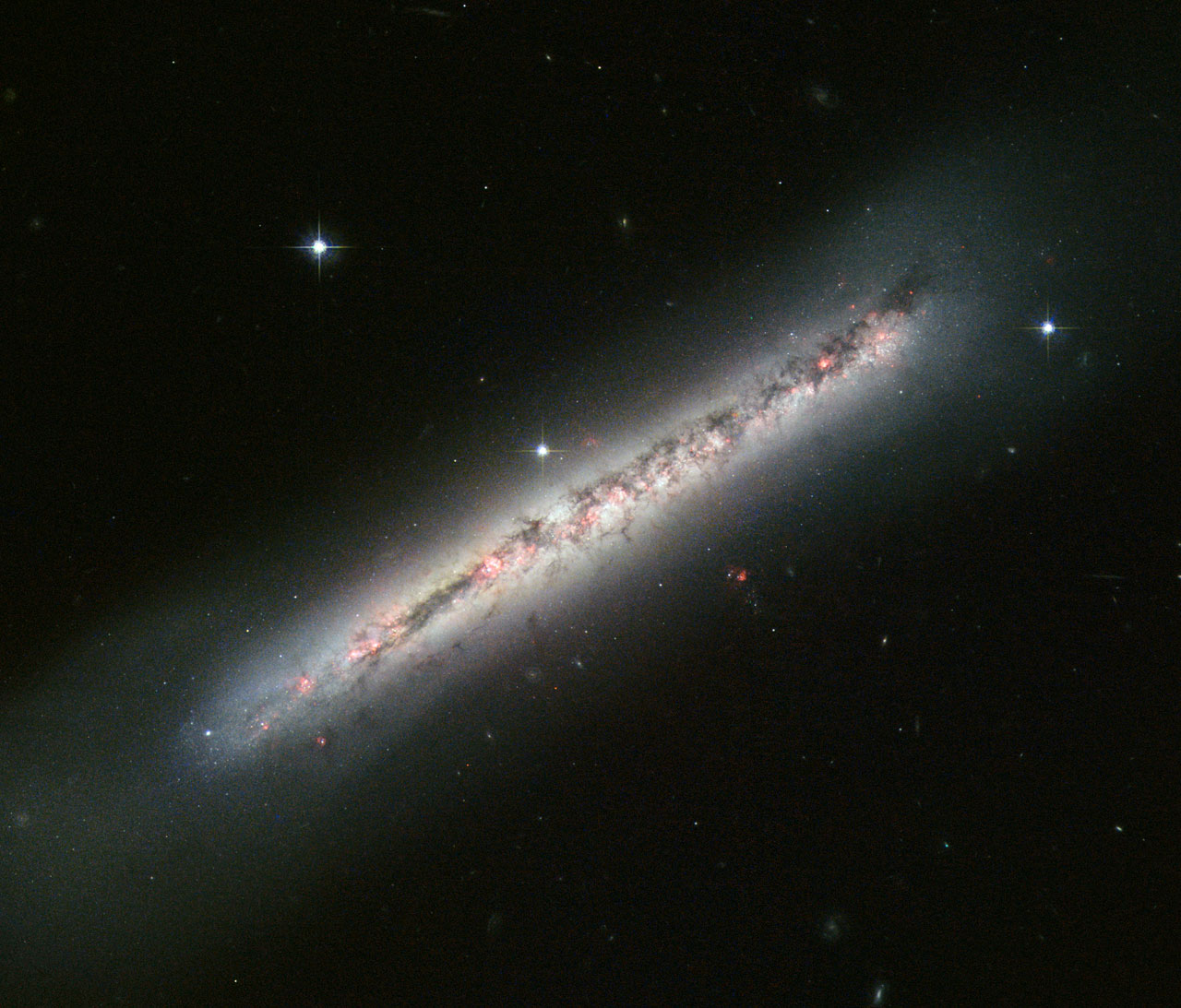
This picture combines data over a ten year period; telescopes before the Hubble space telescope could view the universe back to seven billion light years; the Hubble calculated the Big Bang to 13.7billion years old precisely, and has imaged it here to 13.2 billion light years distant.
James burke tries to show social connections; jacob bronowski says a lot how evolution of the last tent thousand years has been more due to social stimulous than biological. And yet, the original stimulous for mankind may have been more biological or more geological(even astronomical); or, was it?
What started me on these thoughts/question has been an effor to find more James Burkian connections; i've mentioned before how things like science and auto racing lead to spinoff technologies/james burkian connnections. Well, one thought of mine has been how the implications of our scientific knowledge has allowed us the possibility(not always taken advantage of by our leaders) to predict nature - weather, space weather, asteroids, maybe in the future supernova, earthquakes, volcanoes,
Mankind is defined and distinguished from the other life of the Earth by it's dependence on science and technology. This certainly started occuring four, now maybe five if not more, million years ago. Still, one would think the reasons for any Australopithacine or Erectus to move from one place to another was environmental - drought, cold. Well, maybe Homo Erectus did originaly migrate to Europe and Asia were environment; but, they quickly tamed fire and probably did things because of it(for instance the cave paintings almost certainly were not possible without the use of fire).
I bring this up because Jacob Bronowski remarks i'm thinking in the second episode of his "Ascent of Man" how approximatelly ten thousand years ago, change in human life was almost always predominantly due to cultural forces, and that James Burke's "Connections" and "The Day the Universe Changes" almost exclusivelly deals with cultural influences for change and the connections between everything. And yet, a major reason for doing any science and making any technology is to deal with nature and the problems it sometimes presents(like too hot or too cold, or a volcanic eruption, earthquakes and hurricanes).
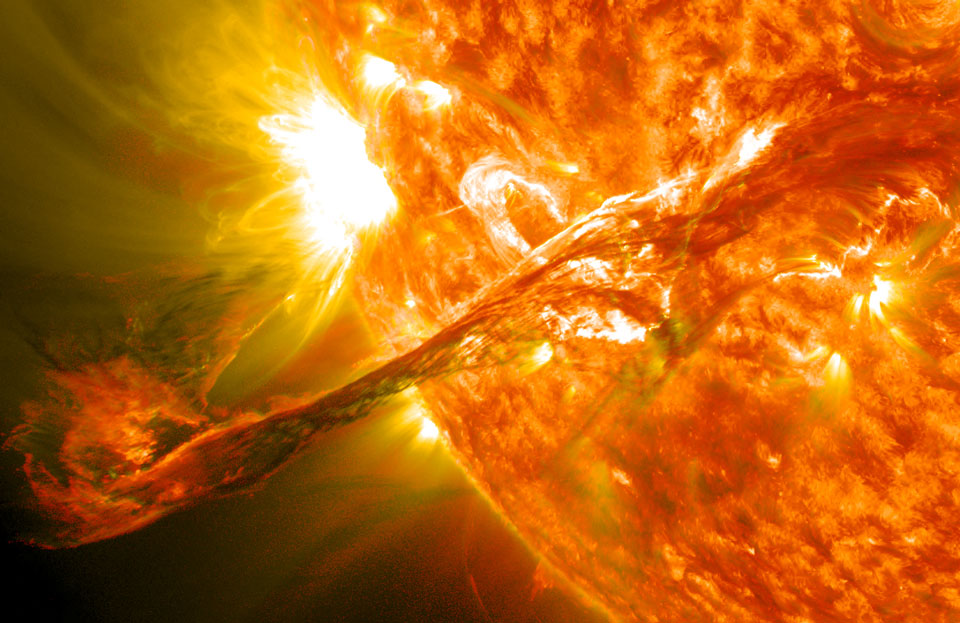
A little while ago, I noted that around the end of world war 2, science and technology funding became much more established amongst all countries in the world. Science and technology still struggles here and there from those who are not scientifically inclined or spirited, but for the most part, they have a lot harder time argueing against the necessity for funding and exploring the universe. I noted how science often times since world war 2 makes the excuse of 'spin-off' technologies. I was looking for more James Burkian 'connections.' Well, I've found that the connections have also come full circle from cultural reasons to dealing with nature - earthquake, volcano, and hurricane prediction; also solar storms, asteroid detection and hopefully the eventual means of deflection. Viruses can only be delt with officially with a mature nanotechnology which we're getting pretty close to doing.
With these connections between almost all the human condition, I thought I'd leave you with another Arthur C Clarke mysterious world episode!
There's probably problems of keeping the masks aligned precisely(could be done with stms); but, one could imagine stamping out any desired molecularly precise pattern, maybe if one wanted to, one could stamp out chips of nano-stms; or, one may not even need to make nano-assemblers to make things to atomic specifications anymore! This could sidestep the need to make molecular machines of molecular precision to make nanomanufacturing happen!
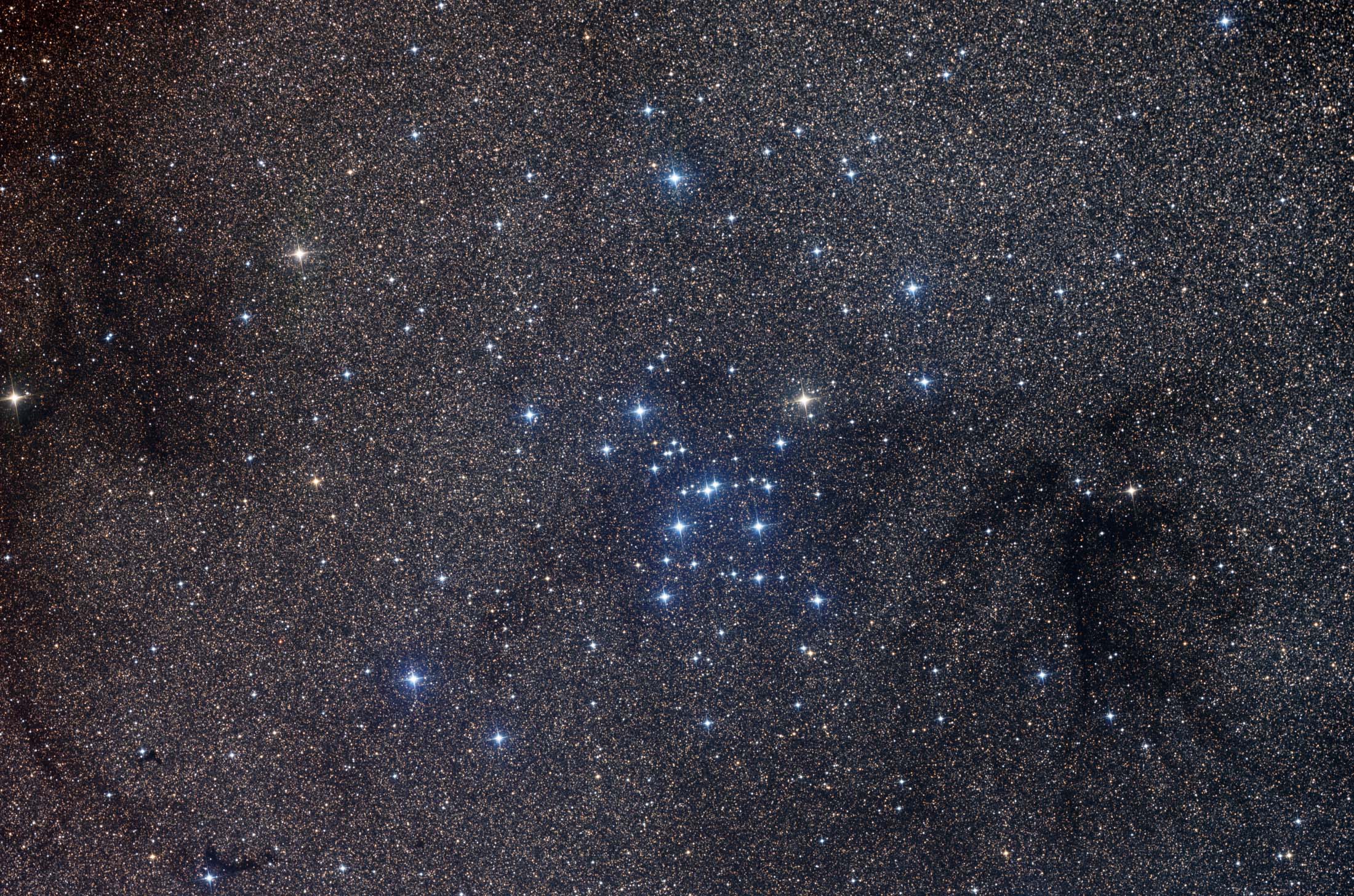
M7: Open Star Cluster in Scorpius Image Credit & Copyright:
Dieter Willasch (Astro-Cabinet)
-----------------------------crazy science/technology for the day------------------------------------------
This is probably just a beginning for making nanomotors(and hence nanomachines) whether out of dna or not. One can almost feel the affects of the recent advances in being able to make dna nanotechnologies.
On the other hand, I saw a remark by Chris Phoenix a few weeks ago(there was a dna nanotechnology article that I did not bother posting here); he said more or less, "yes, dna nanotechnology can eventually get there . . . bootstrapping to Feynman/Drexlerian nanomanufacturing . . . but, other pathways will get there sooner." I'm thinking Chris Phoenix is thinking of stms and the new nano piezo advances that could help make at least microscale stms possible. I didn't ask him what he meant. I just figure he's in the know on stuff not mentioned. If he's correct, there could be some surprising announcements in a year or two!
--------------------------------update for crazy science/tech for the day
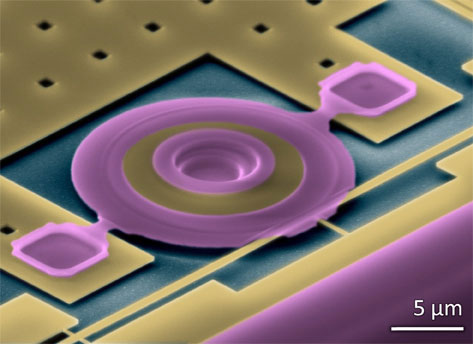
This is a microelectrodynamicaly controlled sensor that can be used for cantilevers for atomic force microscopy; hence, for sizing down stms!(scanning tunneling microscopes; devices that can image and position single atoms; size these guys down, mass produce them on chips, and we can start to see some molecular manufacturing systems pretty soon!).