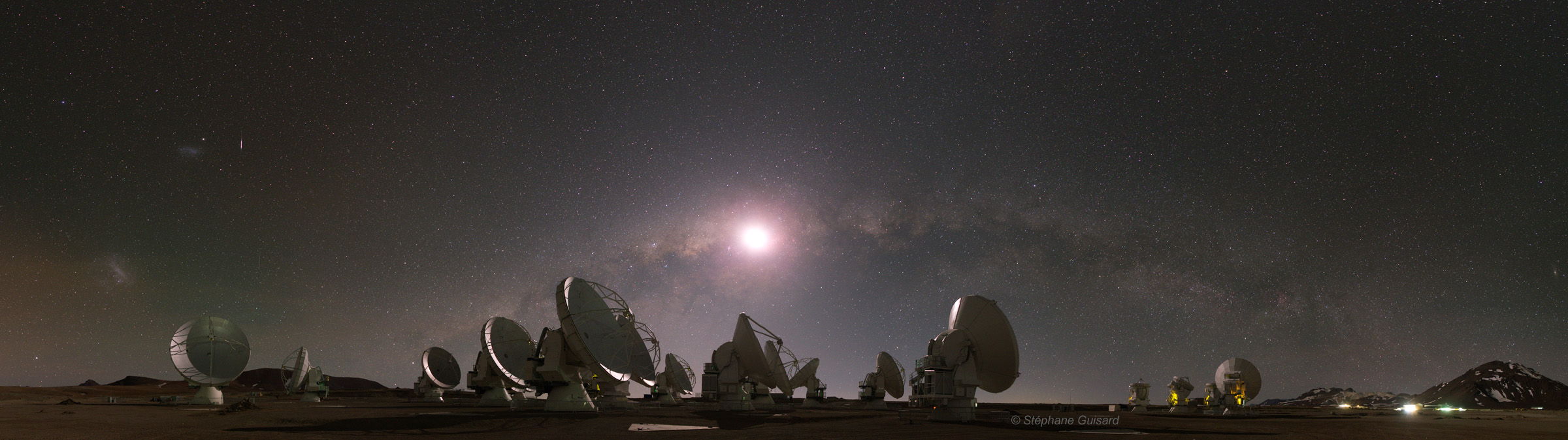
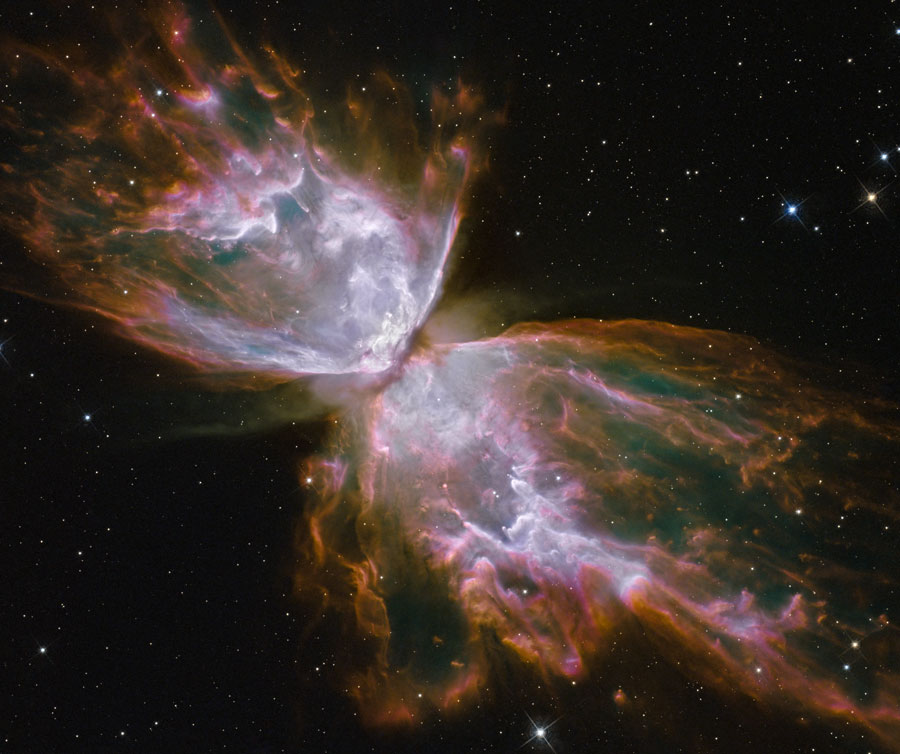
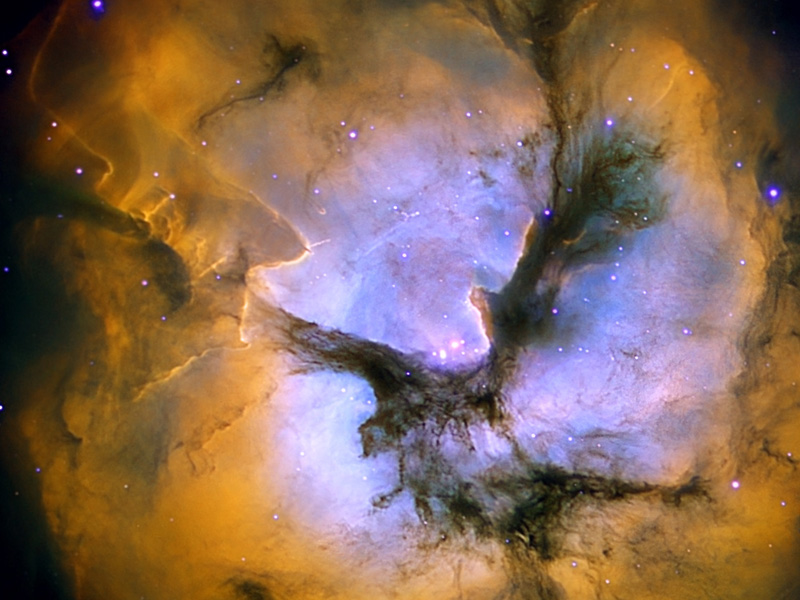
This is a picture of a new microwave interferometric telescope . . . obviously in the southern hemisphere; you can tell that by the irregular galaxies pictured along with the telescope array along with the milky way center.
Recently, global warming researchers suggest that the earth will go into a lot more violent weather mode - in about five years. That number has to be rough; it could be a little sooner or a little later.
I've decided to post this on my blog here finaly because our current civilization is defined by industrialism started around the 1700s. This technologized agriculturalism has a dependence on a finite energy source(human lifetime speaking; over geologic time periods the supply of coal and oil can be replenished). As I've suggested on this blog, knowledge and really technology comes from daming up nature - such as what agriculturalism did by making us have to perform pest control, irrigation, and fertilization. These are finite cuts in the infinit continuity of the universe. So, they lead to problems(mathematical problems defined?); one answer leads to one or more problems and so technological development generally accellerates. Well, the finite energy source dependence of industrialism presents a problem. How to move to another energy source!
One solution is space colonization, which doesn't look like it will happen without some other solution - such as nanomanufacturing, nuclear fusion(preferably over fission). Well, nanotechnology is developing fast; but, honestly, looks like the transition to the nanotechnological era will be rough indeed! Full of cold snaps and heat waves!
----------in a December 17, 2011 update, looks like the effort to meet the five year deadline is too late!(and there was a big conference and major laws passed by the global community to deal with this five year deadline), http://www.nzherald.co.nz/world/news/article.cfm?c_id=2&objectid=10773020
Well, I should go ahead and show this last one I found recently.
With the molecular simulation software for dna and proteins at least(Eric Drexler wishes for these peptides to get some simulation software as well; maybe so), and all these dna breakthroughs and protein engineering confirmed practical, I'd expect at least soft nanotechnology to make an impact well within this year! From there, some groups will be anxious to bootstrap(using the soft dna/protein nanotechnology) to a more robust nanomanufacturing; and from there hopefully to daimondoid nanomanufacturing. But, i think nanomanufacturing will do plenty of wonders(for good or bad) before even then.
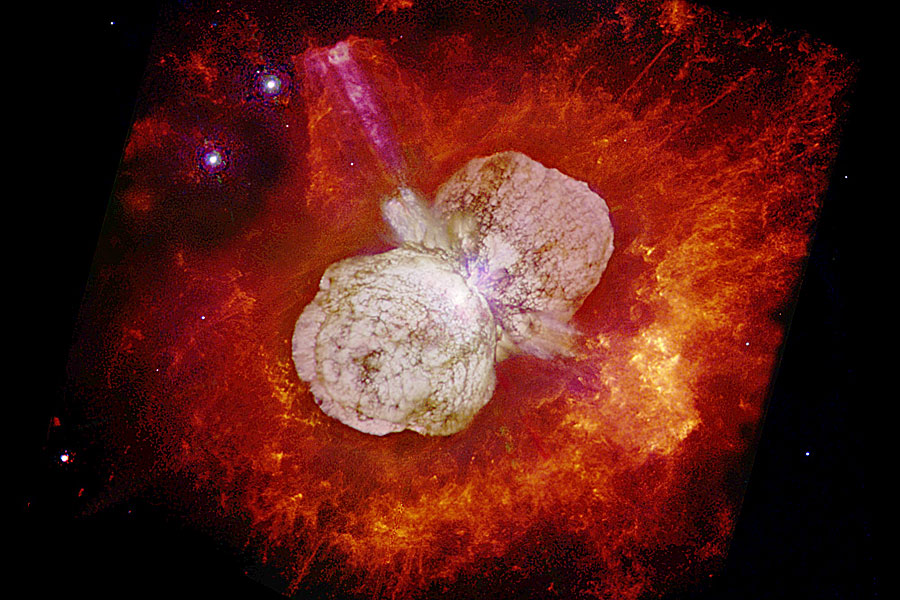
NASA Hubble Space Telescope image of a star that will go supernova in a relatively soon time - astronomicaly speaking. Astronomers are actually surprised it didn't blow up over a hundred years ago(well, the light that showed this recent burst still quite visible . . . evidently!). Well, we'll see!
This image is one of Hubble's earliest and still greatest hits!
Well, this video not available in the Americas is back up on youtube! Here you can see the underground Malta ruins I mentioned way back on this blog! Richard Rudgley also notes some remarkable greenish stones which can only come from the Alps; hence, the Malta builders either traded with those people(the greenish stone looks like a working tool) or they came from there to build Malta. Why? Could they have built Malta on an Island so that others wouldn't destroy their great creation? That's what I would hypothesize. This is also my thought about the Minoan ruins. Now, maybe the Island of Crete had a certain amount of agricultural eventualy. But, maybe they first started out building their maze ruins on Crete to keep their creative artistic effort from being destroyed by others on the mainland. The facts of Malta above gives some strength to my suggestion.
There is much more to say about this video series. Finding the other episodes should be pretty easy. Anyways, in episode 2 or 3, Richard Rudgley talks to somebody who says language might have been started by the use of stones for arithmetic reasons. In my previous blog, I suggested that maybe mathematics helped inspire people to think of agriculturalism. They may have played with plants in geometric patterns and set them in given places. As they came back to these places, they noticed the plants grown where they put them in the ground. I'm forgetting everything I thought of before actually. I'd like to note further here that Morris Kline in his "Mathematics in Western Culture" that mathematics could not have come about from practical reasons of starving for food first. He gives the example that astronomy and the Egyptian mathemtics to do their astronomy could not have been concieved while lost out in sea. They must have come up with the mathematics first which then inspired the astronomy which then inspired navigating in uncharted waters. This may go for agriculturalism as well.
I'd like to further note that the magic language ability seemingling of Human capability only of moving words around like john loves lucy; lucy loves john is a bit of mystery. I had suggested in my previous blog that it might have been mathematics that inspired this language ability. The above conversation of Richard Ridgley with the language origins expert(expert?) suggest likewise as well. Note: i'm not describing everything that needs to be described; to say the least, apply what I and Jacob Bronowski suggest about the nature and origin of mathematical thought in the second to last article of this blog.
Further notes! Remarkably, Richard Rudgley doesn't mention the tally sticks of tens of thousands of years ago(up to thirty thousand years!).